What Is the Best Material for an Outdoor Business Sign?

There isn't one material that is best for every outdoor business sign.
For many permanent external signs, aluminium or aluminium composite (ACM) offers an excellent combination of durability, appearance and value. Powder-coated aluminium is particularly useful for sign trays and premium fascias, acrylic is ideal for dimensional lettering and illuminated signs, while stainless steel can create a high-end architectural finish.
The best material for your sign depends on where it will be installed, how exposed it is to the weather, how long you want it to last, the appearance you want to achieve and your available budget.
For businesses in Sussex, location matters too. A sign on the seafront in Brighton, Worthing or Eastbourne faces very different conditions from signage on a business park in Crawley, Burgess Hill or Haywards Heath.
So rather than asking simply:
“What is the best sign material?”
the better question is:
“What is the best material for my sign, in my location, for the result I want?”
This guide explains the main options.
What Materials Are Used for Outdoor Business Signs?
Modern business signs can be manufactured using a wide range of materials.
Some signs use one material, while others combine several.
For example, a shop fascia might consist of a powder-coated aluminium tray with acrylic lettering, vinyl graphics and LED illumination.
A commercial building sign might use an aluminium panel with individually manufactured stainless-steel letters.
The material therefore affects much more than durability. It also influences the appearance, depth, finish, illumination options, maintenance requirements and cost of the finished sign.
Is Aluminium Composite Good for Outdoor Signs?
Yes. Aluminium composite, often called ACM, is one of the most versatile materials used for outdoor business signage.
ACM consists of thin aluminium skins bonded to a central core, creating a relatively lightweight but rigid panel.
It is commonly used for:
- Shop fascia signs
- Business signs
- Industrial unit signs
- Directory panels
- Information signs
- Building signs
- Large printed sign panels
One of its biggest advantages is value.
A professionally designed ACM panel can create a large, attractive business sign without the cost associated with more complex fabricated lettering or illuminated systems.
Graphics can be applied using cut vinyl or printed vinyl, allowing almost unlimited branding possibilities.
When Would We Recommend ACM?
ACM is particularly suitable when you need a flat panel sign with strong visual impact at a sensible budget.
It is also useful when the graphic face may need updating in future.
Depending on the construction and condition of the panel, it may sometimes be possible to renew the graphics rather than replacing the complete sign.
However, ACM is not automatically the best choice simply because it is economical.
If you want substantial depth, illuminated lettering or a particularly architectural finish, another construction may be more appropriate.
What Is a Powder-Coated Aluminium Sign Tray?
An aluminium sign tray is manufactured by folding aluminium to create a shallow box or tray.
This gives the sign more depth than a completely flat panel and allows fixings to be concealed behind the face.
The aluminium can then be powder coated in a colour that complements the customer's branding or building.
Sign trays can carry:
- Printed graphics
- Cut vinyl lettering
- Flat-cut acrylic letters
- Built-up lettering
- Illuminated letters
- Logos
This makes aluminium trays extremely versatile.
They are particularly popular for shop signs, office buildings, industrial units and commercial premises where the customer wants something more substantial than a flat fascia panel.
Aluminium Composite vs Aluminium Tray – Which Is Better?
Neither is automatically better.
A flat ACM fascia may be completely appropriate for one business, while another benefits from the extra depth and finish of a fabricated aluminium tray.
As a general guide:
ACM is excellent where value, simplicity and a flat sign face are priorities.
Aluminium trays are worth considering where you want greater depth, concealed fixings, specialist finishes or dimensional lettering.
The important thing is choosing the construction that achieves the required result rather than simply specifying the most expensive material.
 ACM school directional panelWindow to the Womb fascia lettering
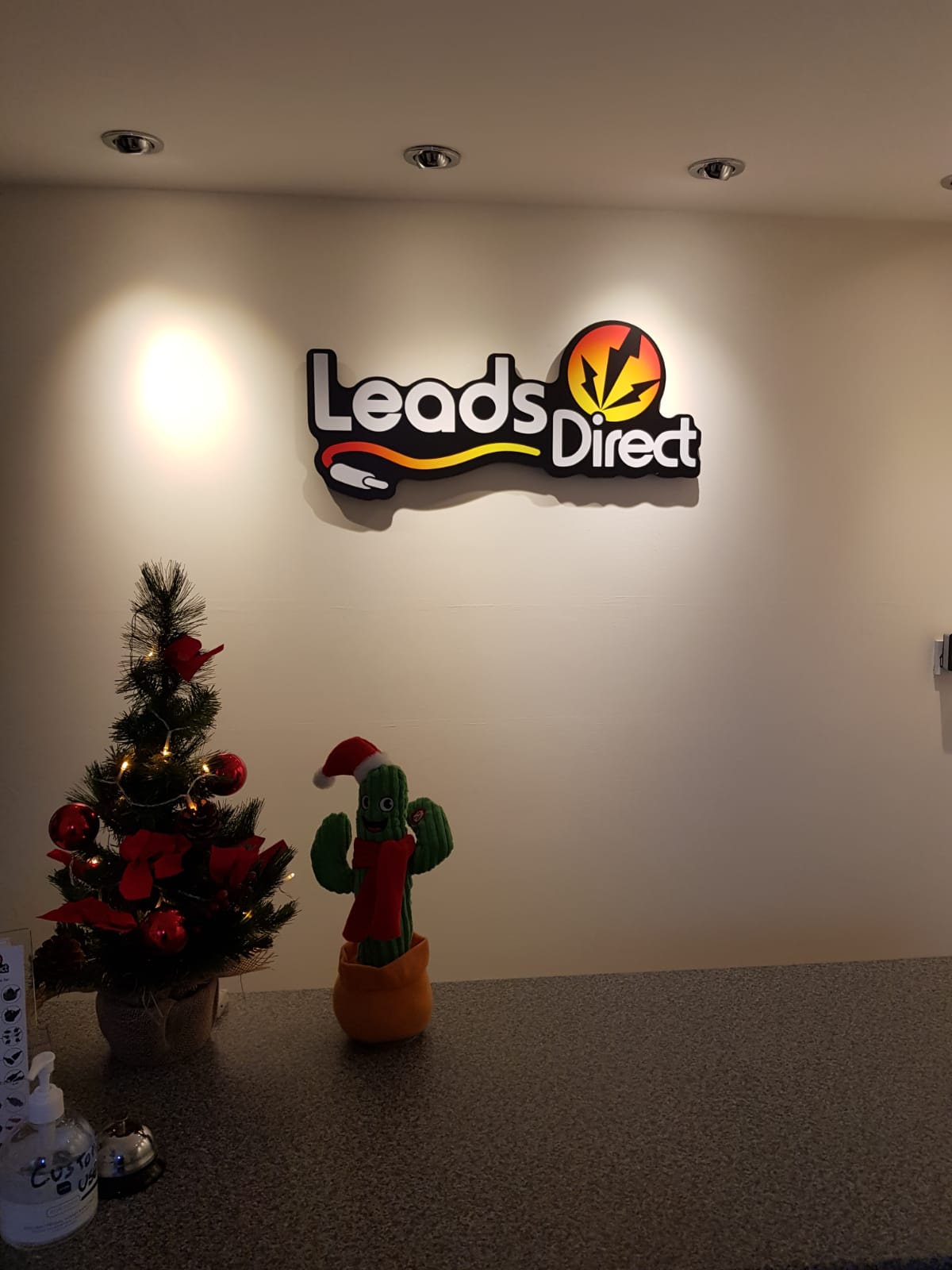 Leads Direct interior dimensional logo sign
Is Acrylic Suitable for Outdoor Signs?
Yes, provided the correct grade and construction are used.
Acrylic is widely used in business signage because it can be cut, shaped, coloured and fabricated into a huge range of forms.
It is particularly useful for:
Flat-cut letters Built-up letters Logos
Sign faces Illuminated lettering Reception branding Decorative panels
Acrylic lettering can be mounted directly to a building or attached to an aluminium sign tray or fascia.
It can also be combined with LEDs to create internally illuminated, face-lit or halo-illuminated effects depending on the sign construction.
When Should I Choose Acrylic Lettering?
Acrylic is particularly effective when you want the business name or logo to have physical depth.
Compare a logo printed onto a flat panel with individual letters mounted away from the surface.
Both can display exactly the same branding, but they create very different visual impressions.
Dimensional letters can create shadows and depth that help a shopfront or business entrance look more substantial.
That doesn't mean every sign needs 3D lettering.
Good signage should suit the building, brand and budget.
Is Stainless Steel Good for Outdoor Business Signs?
Stainless steel can produce some of the most attractive premium business signage.
It is frequently used for:
- Corporate lettering
- Built-up letters
- Hotel signage
- Office signs
- Architectural branding
- Prestige shopfronts
- Reception signs
Finishes can include brushed, polished and other specialist appearances.
However, there is an important point that businesses—particularly those near the Sussex coast—should understand:
Not all stainless steel is the same.
Stainless steel is corrosion resistant rather than completely corrosion proof.
For exposed coastal signage, the correct grade of stainless steel becomes particularly important.
What Stainless Steel Should Be Used Near the Coast?
For exposed signage close to the sea, we will normally consider 316 stainless steel, often referred to as marine-grade stainless steel.
It provides greater resistance to salt-related corrosion than commonly used 304 stainless steel.
This is particularly relevant for businesses in coastal locations such as:
- Brighton & Hove
- Shoreham
- Worthing
- Eastbourne
- Seaford
The sign itself is only part of the consideration.
Fixings, studs, locators and other exposed metal components also need to be appropriately specified.
Choosing the correct material at the start can be considerably cheaper than dealing with staining, corrosion or premature refurbishment later.
What About Vinyl Graphics?
Vinyl isn't normally the structural part of a sign, but it is one of the most important materials used to create the finished appearance.
Vinyl can provide:
- Company names
- Logos
- Printed images
- Opening hours
- Colours
- Patterns
- Directional information
- Promotional messages
Different vinyl films are designed for different applications and expected lifespans.
A short-term promotional graphic does not necessarily require the same material as permanent external business branding.
For outdoor signage, the vinyl, printing system, laminate where required and underlying substrate should be considered together.
Simply describing something as “outdoor vinyl” doesn't tell you much about its expected performance.
Is Foamex Suitable for Outdoor Business Signs?
Foamex—often used as a generic description for expanded PVC sheet—is useful for many signs, particularly temporary, indoor or sheltered applications.
It is lightweight, easy to print and relatively economical.
However, for a permanent exposed external business fascia, we would normally consider whether aluminium composite, aluminium or another more suitable construction would provide better long-term value.
That doesn't make Foamex a poor material.
It means every material has applications where it makes sense and applications where something else is preferable.
Are Wooden Signs Suitable for Businesses?
Timber and timber-effect signs can work beautifully for the right business.
They may be appropriate for:
- Country pubs
- Cafés
- Restaurants
- Heritage properties
- Rural businesses
- Visitor attractions
Traditional materials can create a character that would be difficult to achieve with a modern aluminium sign.
However, timber requires different maintenance considerations from aluminium or acrylic, particularly when permanently exposed to the weather.
The decision should therefore be based on the desired appearance and environment rather than simply following current fashion.
 Hunglish acrylic shop lettering
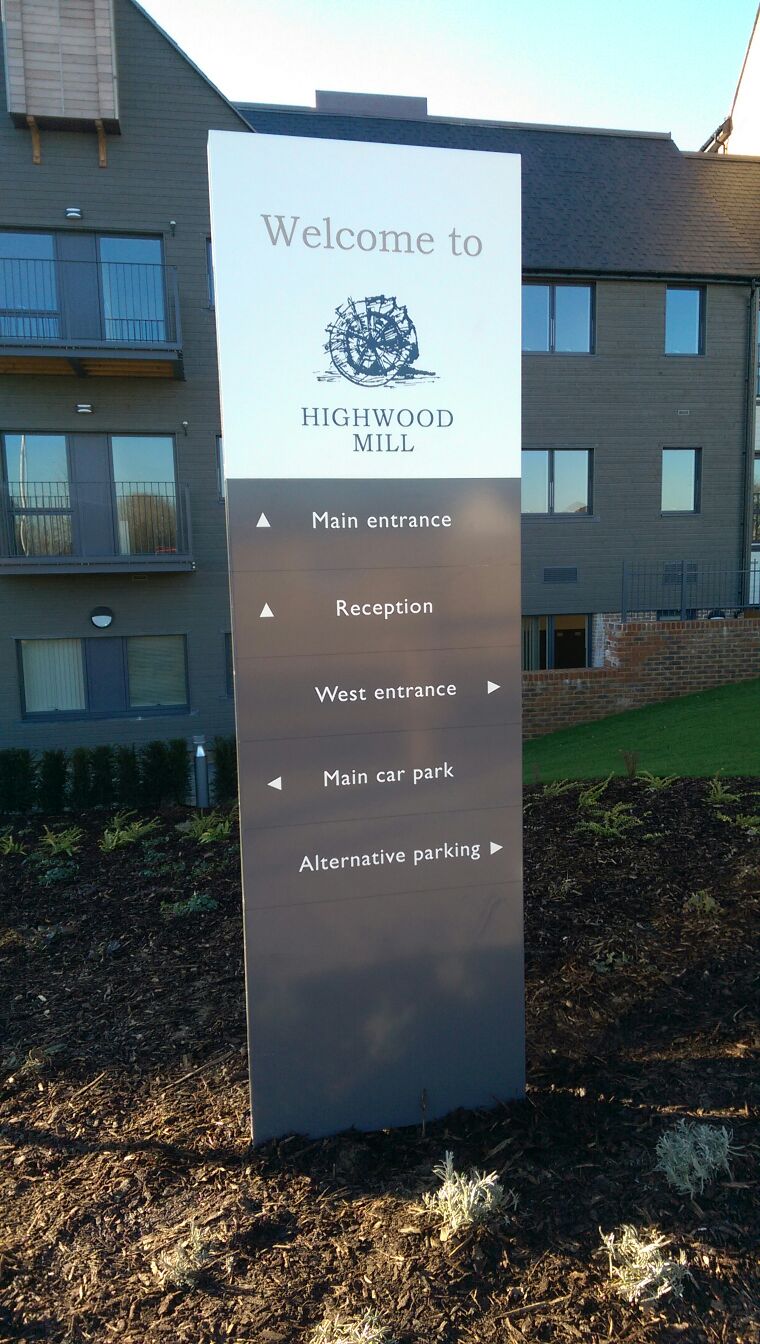 Highwood Mill dimensional lettering
 Built-up exterior business letters
What Is the Best Material for a Shop Sign?
There isn't one universal answer.
For many shopfronts, we would initially consider one of these approaches:
ACM fascia with applied graphics for a straightforward, cost-effective sign.
Powder-coated aluminium tray for a more substantial fascia.
Aluminium tray with acrylic lettering where depth and a premium appearance are required.
Built-up or illuminated lettering where visibility and impact are particularly important.
The best solution depends on the building itself.
A small independent shop on a traditional high street may need something entirely different from signage on a large retail unit or modern business park.
What Is the Best Sign Material for an Industrial Unit?
Industrial and commercial buildings often need signs to be seen from considerably further away than a small high-street shop.
That can make size, contrast and positioning as important as the material itself.
Aluminium composite panels, aluminium trays, large fabricated letters and illuminated signs can all work effectively.
For premises on industrial estates around Crawley, Burgess Hill and Haywards Heath, we would look particularly carefully at viewing distance, vehicle approaches and the location of neighbouring units.
A beautifully manufactured sign is ineffective if customers can't see it until they have already driven past.
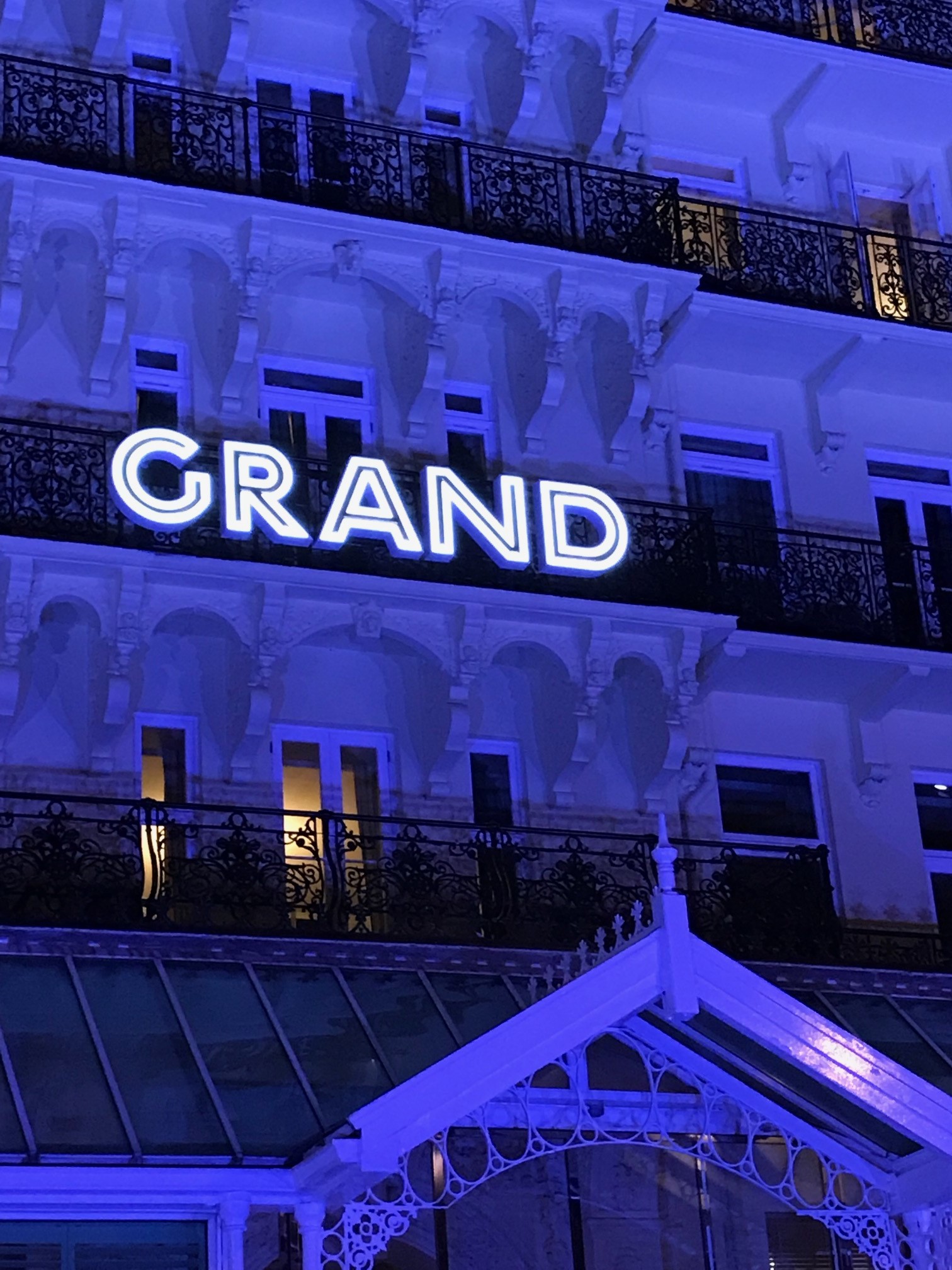 Grand Hotel illuminated letters
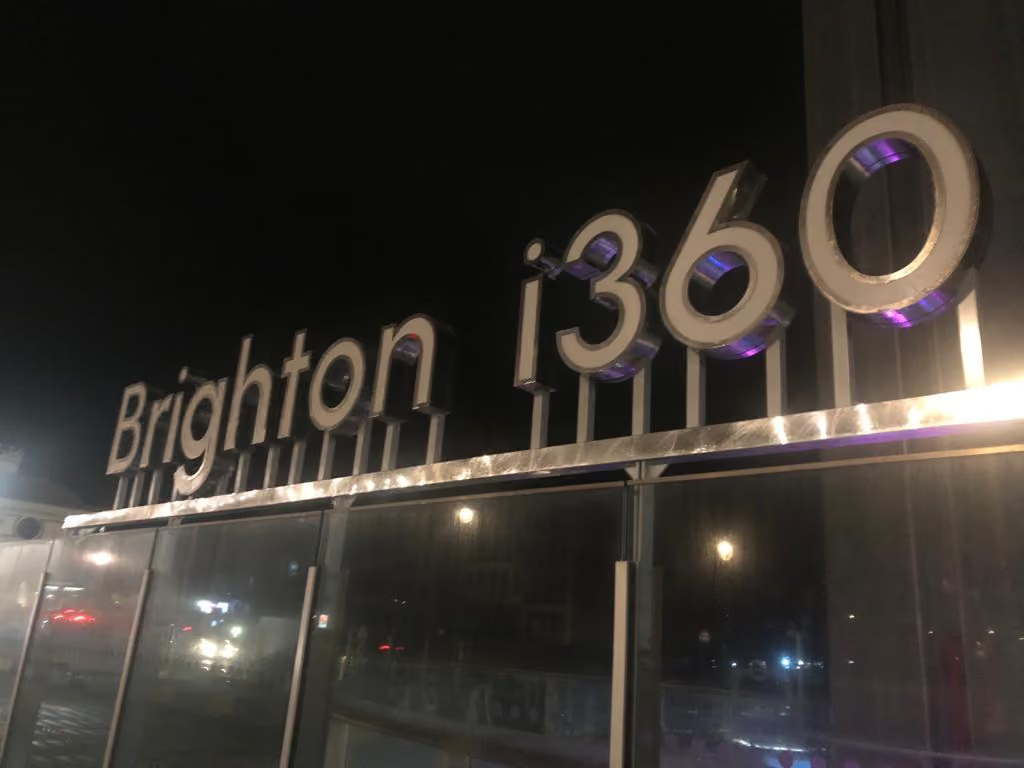
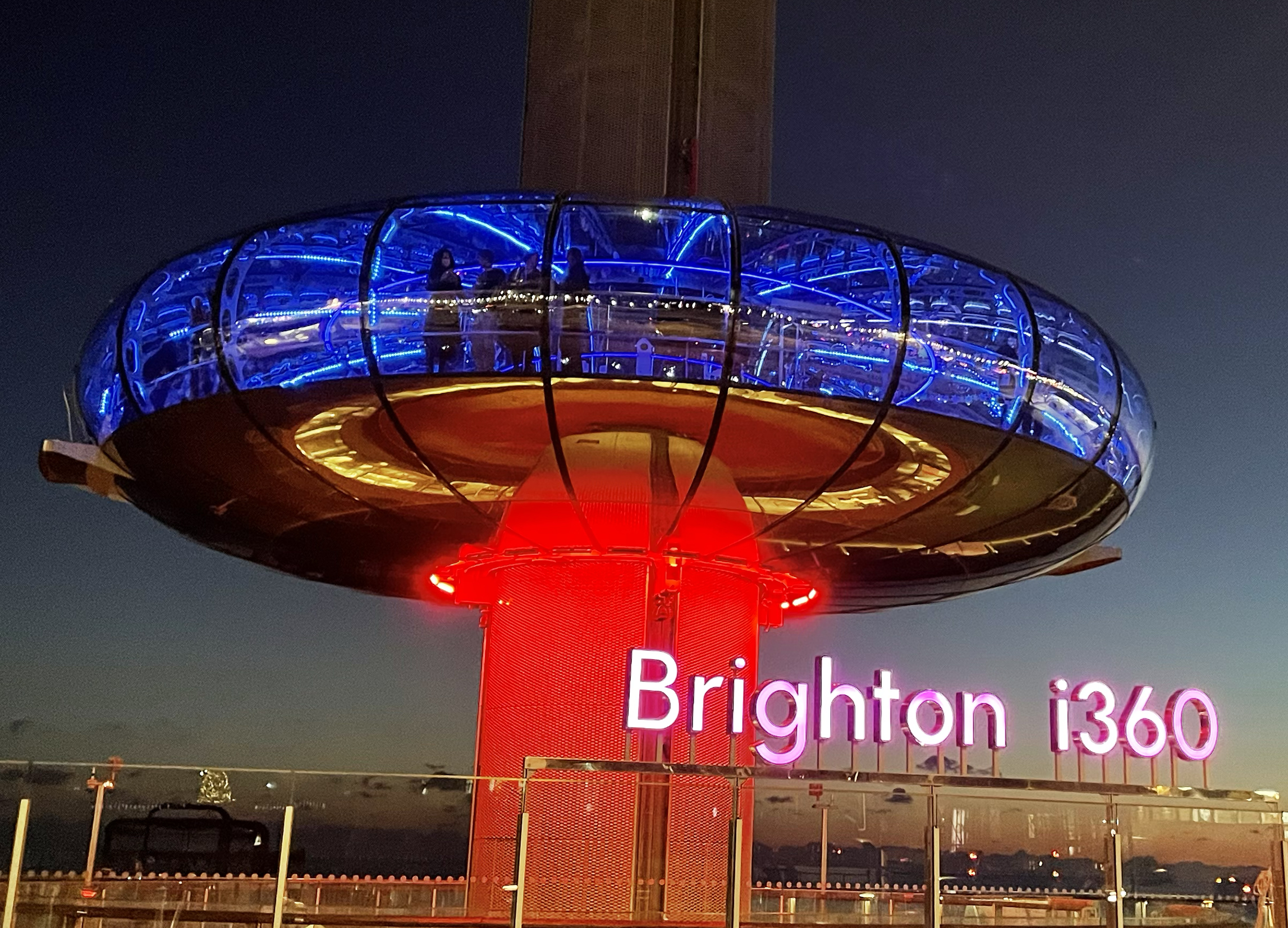 Brighton i360 illuminated signage
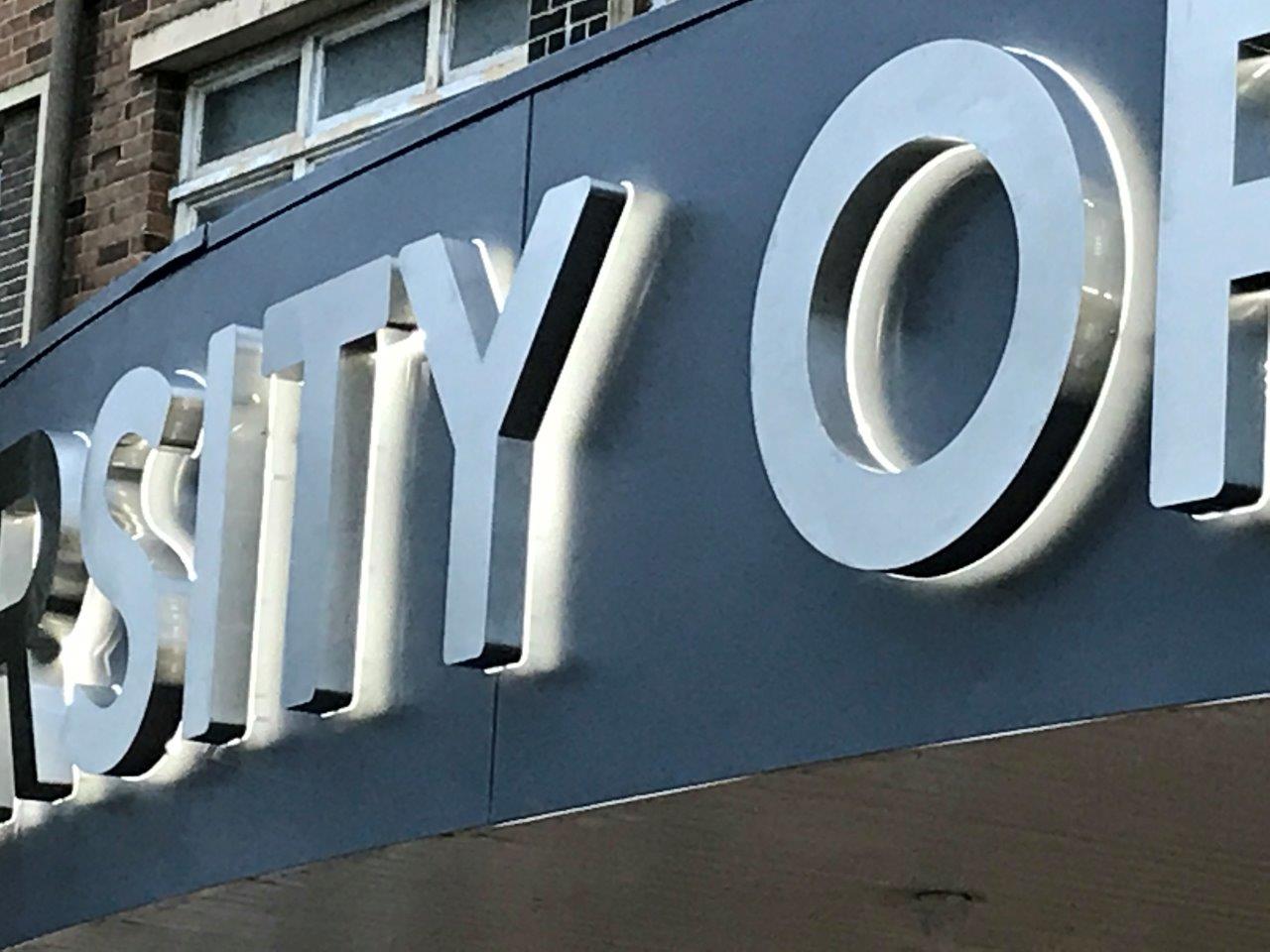 University of Brighton halo-illuminated letters
Does the Location of My Business Affect Which Material I Should Choose?
Absolutely.
We consider the location before recommending a final specification.
Coastal Sussex
Businesses in Brighton & Hove, Worthing and Eastbourne can face greater exposure to salt-laden air and wind.
This doesn't mean coastal businesses need completely different types of signs.
It means the choice of metal grades, finishes, fixings and maintenance regime deserves particular attention.
Inland Sussex
Businesses around Crawley, Burgess Hill and Haywards Heath are generally less exposed to marine conditions, but weather, orientation, surrounding buildings and installation height still matter.
A sign mounted high on an exposed industrial building may experience harsher conditions than a sheltered shop fascia only a few miles away.
This is why we don't believe signage should be specified from a catalogue alone.
The location matters.
How Long Should an Outdoor Business Sign Last?
For initial budgeting, five to ten years can be a useful starting point for many permanent outdoor business signs, but there is no single guaranteed lifespan that applies to every sign.
Different elements of the same sign can also age at different rates.
The panel may remain perfectly sound while the applied graphics need refreshing.
An illuminated sign may only require a power supply or lighting component to be replaced.
Acrylic letters may remain serviceable while the surrounding fascia is updated.
The expected life therefore depends on:
- Material specification
- Exposure
- Installation
- Orientation
- Cleaning and maintenance
- Graphics
- Lighting
- Fixings
This is why comparing two quotations purely on price can be misleading.
What Is the Most Cost-Effective Material for an Outdoor Sign?
The cheapest material today isn't necessarily the cheapest solution over the life of the sign.
Imagine two options.
One costs slightly less but needs replacing relatively quickly.
The other costs more initially but remains attractive and serviceable for considerably longer.
The second option may provide better overall value.
On the other hand, if you have a short lease or only need temporary signage, paying for a premium long-life construction may make little sense.
Good signage specification is about spending money where it makes a meaningful difference.
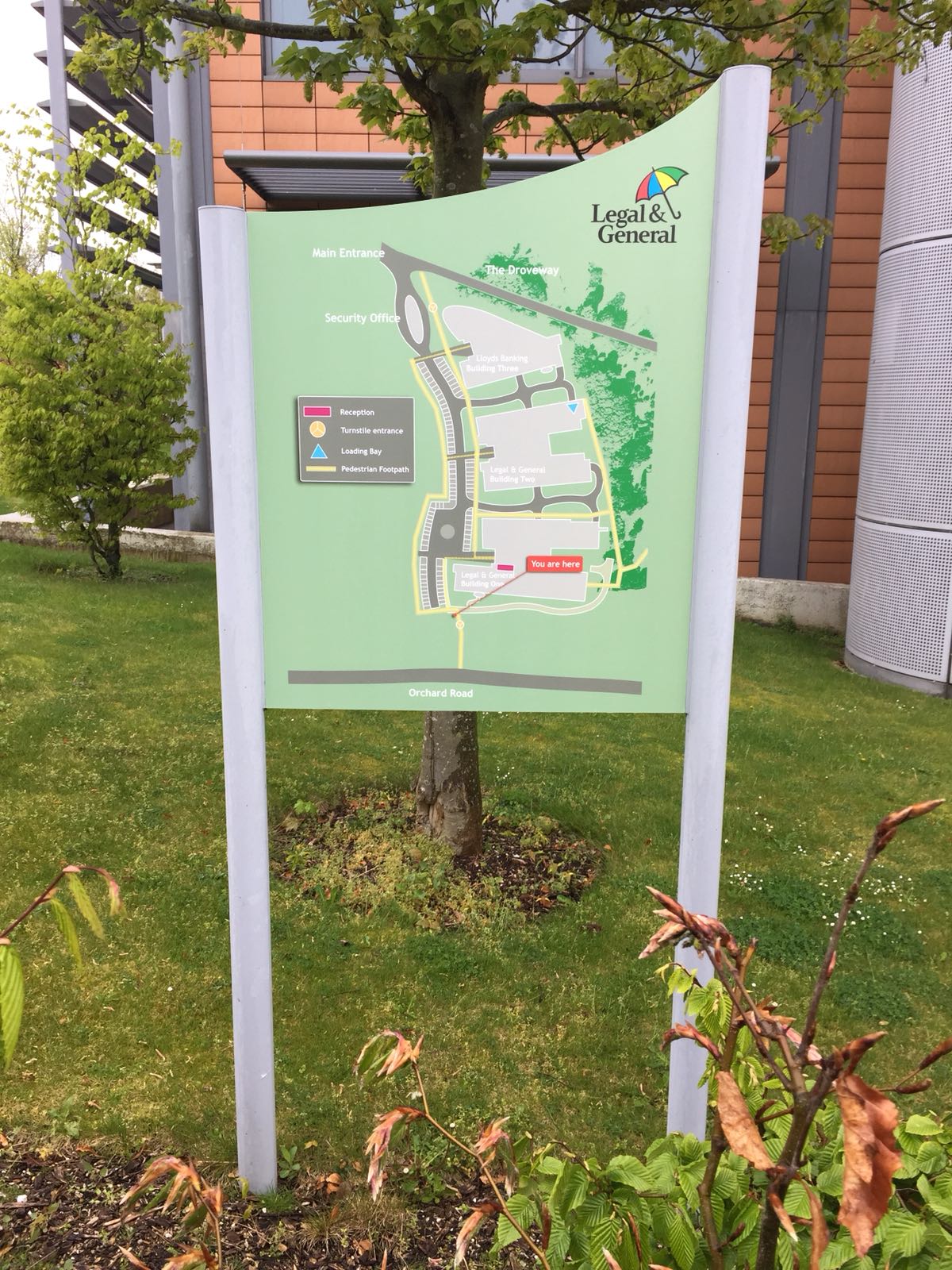 Legal & General outdoor wayfinding
 Police and Fire and Rescue sign
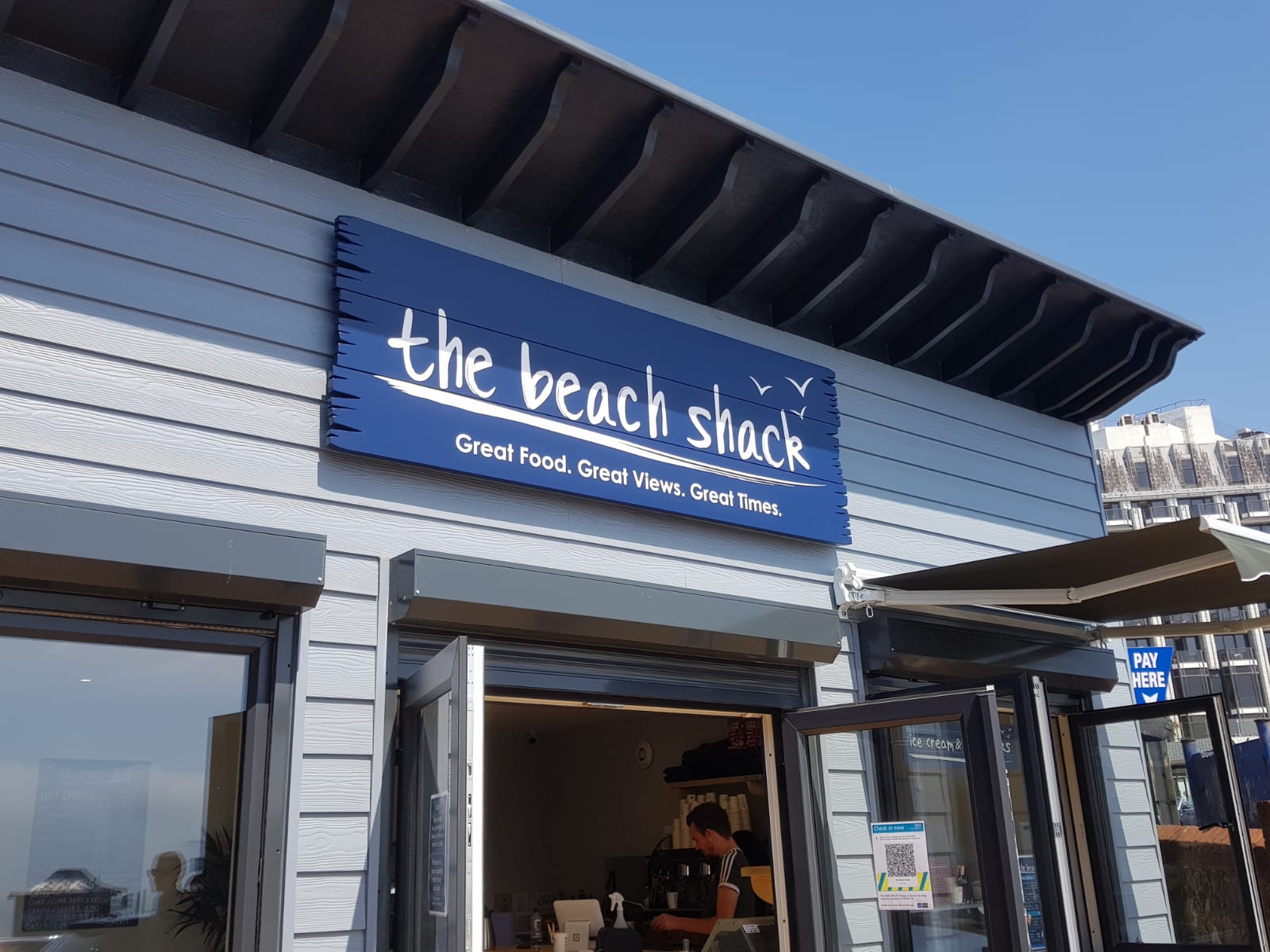 Raised exterior sign lettering
Should I Choose the Sign Material Myself?
You don't need to.
It's useful to understand the main options, but you shouldn't need to become an expert in aluminium grades, acrylic, vinyl systems, powder coating and stainless steel before ordering a sign.
Tell your sign company:
- What you want the sign to achieve
- Where it will be installed
- How long you expect to be at the premises
- What appearance you like
- Whether you want illumination
- Your approximate budget
From there, a good signage company should be able to explain the realistic options and the advantages and disadvantages of each.
Frequently Asked Questions About Outdoor Sign Materials
What is the best material for an outdoor business sign?
For many permanent external business signs, aluminium, aluminium composite and acrylic are among the most useful materials. The right choice depends on the sign design, location, exposure, lifespan and budget.
Is aluminium composite waterproof?
ACM is widely used for external signage because it is suitable for outdoor sign applications when correctly specified and installed. The complete sign construction, edges, graphics and fixing method still need to suit the installation.
Is aluminium better than acrylic for signs?
They perform different jobs. Aluminium is particularly useful for panels, trays and structural components, while acrylic is excellent for lettering, logos, faces and illuminated elements. Many high-quality signs combine both.
What is the best material for signs near the sea?
Material specification becomes particularly important near the coast. Aluminium and appropriately finished materials can perform well, while exposed stainless-steel components may require 316 marine-grade stainless steel where salt exposure is significant.
What material is best for shop signs?
ACM fascias, powder-coated aluminium trays and acrylic or built-up lettering are all popular options. The best choice depends on the shopfront, brand, required lifespan and budget.
What is the cheapest material for a business sign?
A straightforward flat-panel sign will generally be more economical than fabricated dimensional or illuminated signage. However, choosing purely on initial cost can produce poor value if the material or construction is unsuitable for the location.
Can an existing sign be refurbished instead of replaced?
Often, yes. If the underlying panel or structure remains suitable and safe, it may be possible to replace graphics, renew lettering, repair illumination or refurbish part of the sign instead of manufacturing everything again.
Choosing Business Sign Materials Across Sussex
The correct sign material depends on far more than the appearance of a sample in a showroom.
At The Sussex Sign Company, we design, manufacture and install business signage across Sussex and the South East.
We regularly work with businesses throughout Brighton & Hove, Worthing, Crawley, Burgess Hill, Haywards Heath and Eastbourne, so we understand that the right specification for an exposed seafront business may be quite different from the best solution for an office, school, shop or industrial unit inland.
Whether you're looking for a straightforward business sign, new shopfront signage, dimensional lettering, an illuminated sign or a complete rebrand, our team can help you compare the options.
You don't need to know which material you need before contacting us.
Send us a photograph of your premises, your logo and an idea of what you're trying to achieve.
We'll help you choose a sign material and construction that works for your brand, your building, your location and your budget.
Related signage services
Explore our sign design and sign installation services, plus our business signs and shop signs.